The activewear market treats pilates and yoga apparel as essentially interchangeable categories, presenting the same leggings, tops and shorts for both disciplines with minimal acknowledgement of the genuinely different physical demands that pilates singapore and yoga place on the clothing worn during practice. For practitioners who attend both disciplines casually, this interchangeability is largely adequate. The performance differences between discipline-appropriate and discipline-inappropriate apparel are small enough that occasional practitioners are unlikely to notice them. For serious pilates practitioners who attend multiple sessions per week, who work on reformer equipment and mat exercises that place specific and unusual demands on their clothing, and who have developed the movement awareness to notice when apparel is impeding their practice, the technical differences between pilates-optimised and general yoga activewear are meaningful.
Understanding what pilates practice specifically demands from apparel, and how those demands differ from yoga’s requirements, is the foundation for building a kit that genuinely supports the practice rather than simply covering the body during it.
The Reformer Environment and Its Unique Clothing Challenges
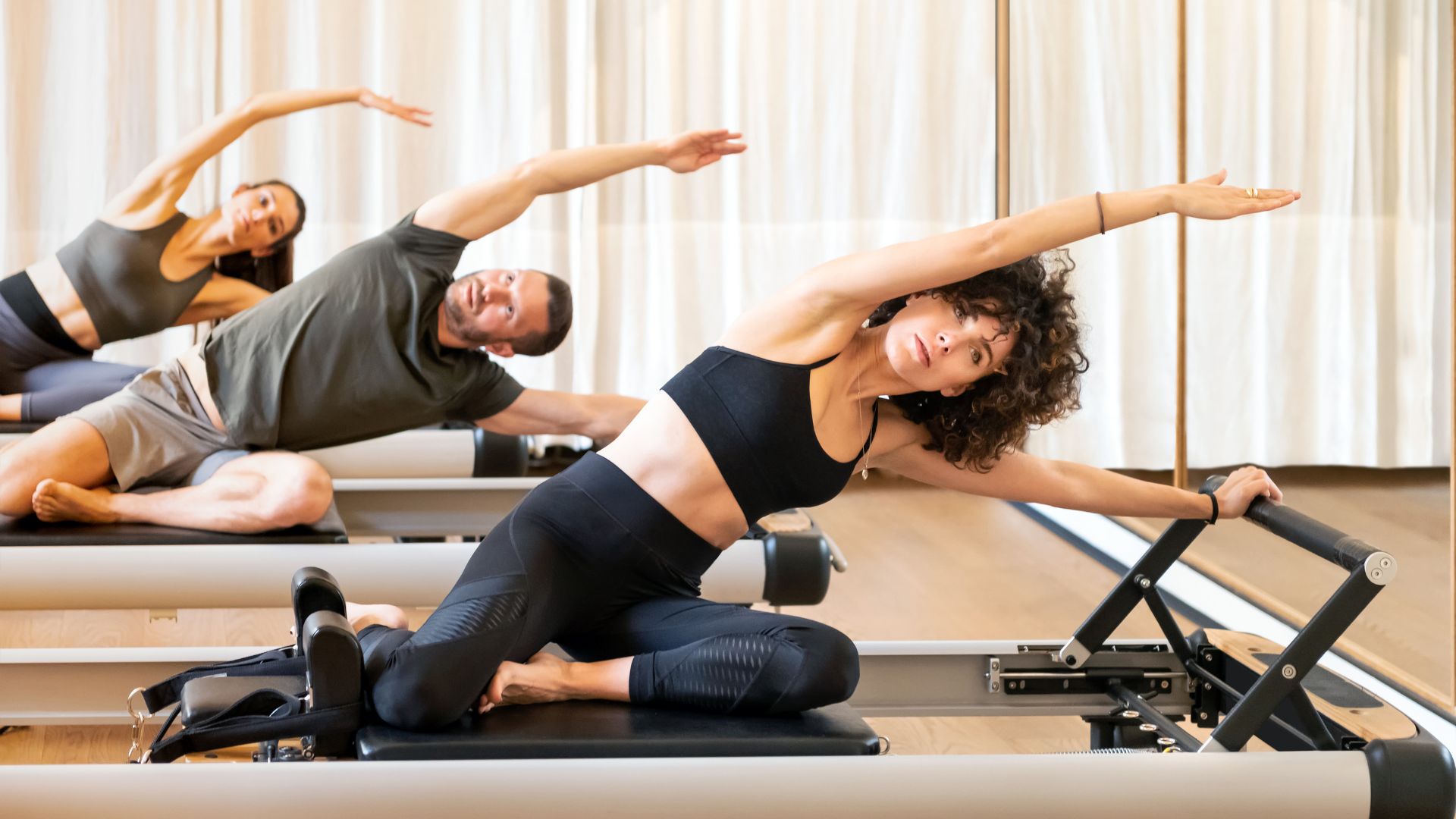
Reformer pilates creates clothing challenges that have no equivalent in mat pilates, yoga or most other group fitness formats, because the reformer machine itself interacts with the clothing in ways that floor-based exercise does not.
The carriage surface of the reformer, where the practitioner stands, sits, kneels or lies during various exercises, creates friction and pressure forces against clothing that vary considerably across different exercise positions. In foot bar work, the feet are often bare, but the rest of the body may be in contact with the carriage surface, and clothing that rides up, compresses uncomfortably or creates pressure points under body weight produces distracting discomfort that competes with the internal awareness that pilates requires.
The straps and handles of the reformer create a different interaction concern. Loose or oversized clothing can catch on the spring-loaded components of the machine, creating a safety concern in exercises where rapid spring release is part of the movement pattern. Clothing that rides up during overhead arm work or that does not maintain coverage during inverted or semi-inverted exercise positions creates both a distraction and a practical modesty concern in group class settings.
The temperature environment of reformer pilates differs from most other studio contexts. The reformer’s spring resistance mechanisms create a specific work demand that generates significant localised muscular exertion in the legs, hips and core without the cardiovascular intensity that produces the heavy full-body perspiration of a heated yoga class or a high-intensity cardio format. The result is a temperature regulation challenge that sits between the needs of a hot yoga class and a yin yoga session: enough exertion to require some moisture management, but not enough to make minimal coverage the priority that hot yoga demands.
The Grip Dimension: Why Pilates Needs Different Solutions Than Yoga
Grip in pilates occurs in different anatomical locations and from different mechanisms than grip in yoga, and this difference has direct implications for the clothing design features that are most useful.
In yoga, the primary grip concern is the interface between hands, feet and a mat surface during weight-bearing and balance postures. In reformer pilates, the grip concerns are more varied: the contact between the feet and the reformer footbar, the contact between the body and the carriage surface in various exercise positions, and the contact between the hands and the straps or handles of the machine.
The footbar contact issue is addressed by most practitioners through bare feet, which provide the most reliable feedback and grip on this surface. The carriage contact issue is where clothing choice becomes relevant: smoother fabrics that slide over the carriage surface are better suited to exercises where some movement between body and carriage is intended, while fabrics with more textured surfaces that provide grip are better suited to exercises where maintaining position against the carriage is the priority.
For mat pilates work, the hand and knee contact concerns that reformer work does not create become relevant. Mat pilates involves a higher proportion of kneeling and four-point support positions than most yoga formats, creating a sustained pressure on the knee surface that thin or inadequately padded leggings makes uncomfortable over extended hold times. The contact between palms and mat surface in four-point positions requires the same grip-friendly fabric considerations that yoga hand positioning demands.
Length, Coverage and the Pilates Movement Range
The ranges of motion that pilates exercises move through, and the body positions in which these ranges are achieved, create specific coverage requirements that differ in meaningful ways from yoga’s.
Pilates places considerable emphasis on hip flexion through a wide range, from the gentle double knee to chest positions of early clinical exercises to the strong hip flexion of teaser variations and advanced rolling exercises. In high hip flexion positions, leggings with inadequate rise height or tops without sufficient length create coverage gaps that are both practically uncomfortable and socially inconvenient in group class settings.
The supine positions that constitute a significant proportion of both mat and reformer pilates work create a different coverage challenge from the standing and downward-facing positions that dominate many yoga classes. Leggings that maintain full coverage and waistband position in upright work may reveal the lower back or shift the waistband position uncomfortably in extended supine positions where the pelvis is moving through ranges of posterior and anterior tilt. High-waisted designs with waistbands that maintain their position through pelvic movement are more consistently appropriate for the pilates context than standard waistband designs.
The arm position range of pilates includes a higher proportion of exercises with arms extended overhead or out to the side than is typical in most yoga formats. Tops that are designed primarily for forward-folding and arm-bearing positions may ride up significantly during overhead arm work, particularly in the reformer strap exercises that regularly bring the arms into full overhead extension. Longer crop tops and tucked or fitted designs that maintain their position through overhead movement address this issue more effectively than shorter tops with elasticated hems that ride up freely.
Compression Intensity and Its Pilates-Specific Application
The compression properties of pilates apparel require a more nuanced consideration than the binary compressed or uncompressed choice that most activewear marketing implies.
High compression in the leg and hip regions is appropriate and beneficial for several pilates applications, including the proprioceptive feedback that compression provides during the subtle hip and pelvis positioning that forms the foundation of pilates technique, and the muscular support that compression provides during the sustained isometric work of many classical exercises. However, high compression around the abdomen and lower rib cage is specifically contraindicated for the deep diaphragmatic breathing that pilates breathing technique requires. Waistbands or tops that apply high compression to the lower thorax restrict the rib cage expansion that full diaphragmatic breathing demands, producing a direct conflict between the compression garment’s function and the exercise’s intended effect.
The design solution to this tension is selective compression: high compression in the leg and hip regions where proprioceptive and muscular support benefit is clear, transitioning to minimal compression in the lower rib cage and abdominal regions where breathing freedom is the priority. Several performance apparel manufacturers have begun designing specifically for this requirement, producing pilates-specific leggings and tops with graduated compression profiles that address the discipline’s unique combination of stability and breathing freedom needs.
Yoga Edition serves a pilates community whose movement awareness and practice sophistication have developed to a level where the performance details of their apparel choices are genuinely relevant to the quality of their practice, reflecting the broader principle that serious engagement with pilates extends naturally into the tools and equipment that support the depth of the discipline.